
WHO IS ALICE?
You know ALICE. You see ALICE every day. ALICE is the childcare worker at your daycare, the cashier at your supermarket, your child’s teacher, an office clerk, a caregiver. The ALICE population is comprised of our essential workers. They are part of every community and every neighborhood and they are struggling month to month to make ends meet.
WHAT DOES ALICE MEAN?
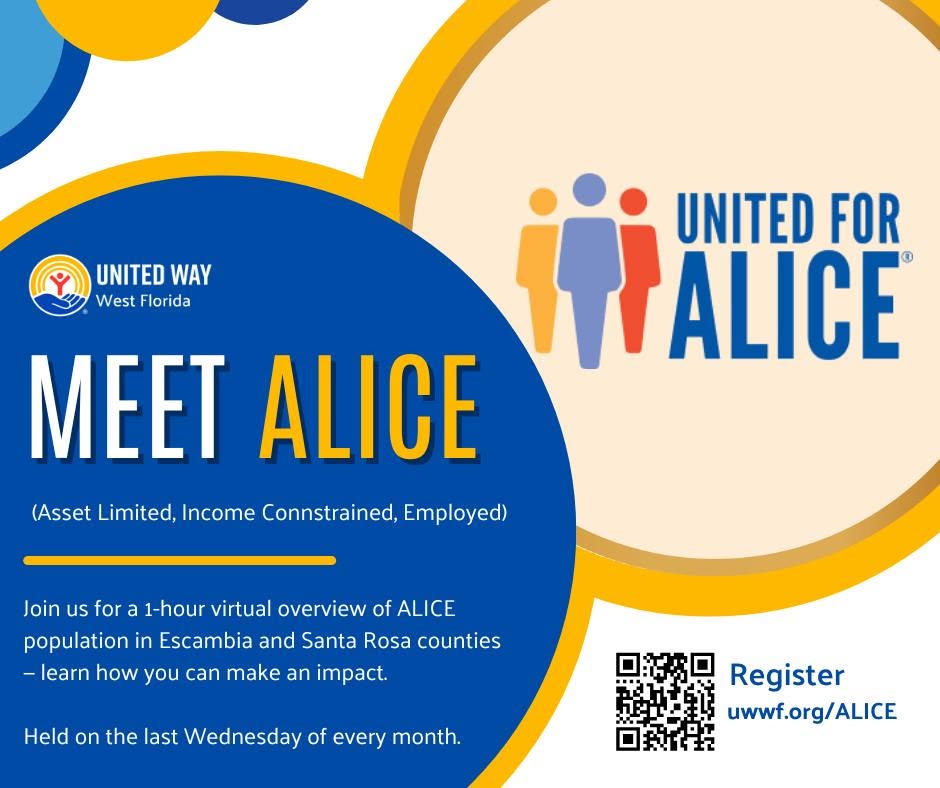
ALICE stands for Asset Limited, Income Constrained, Employed. ALICE households earn more than the Federal Poverty Level but less than what it truly costs to afford basic necessities—also known as the ALICE Threshold.
ALICE households span all races, ages, ethnicities, and abilities, though households of color are disproportionately affected. Many work one or more jobs, yet their wages have not kept pace with the rising cost of housing, food, health care, childcare, and transportation. Family caregiving responsibilities can make it even harder to find stable, adequate work.
One Emergency Away
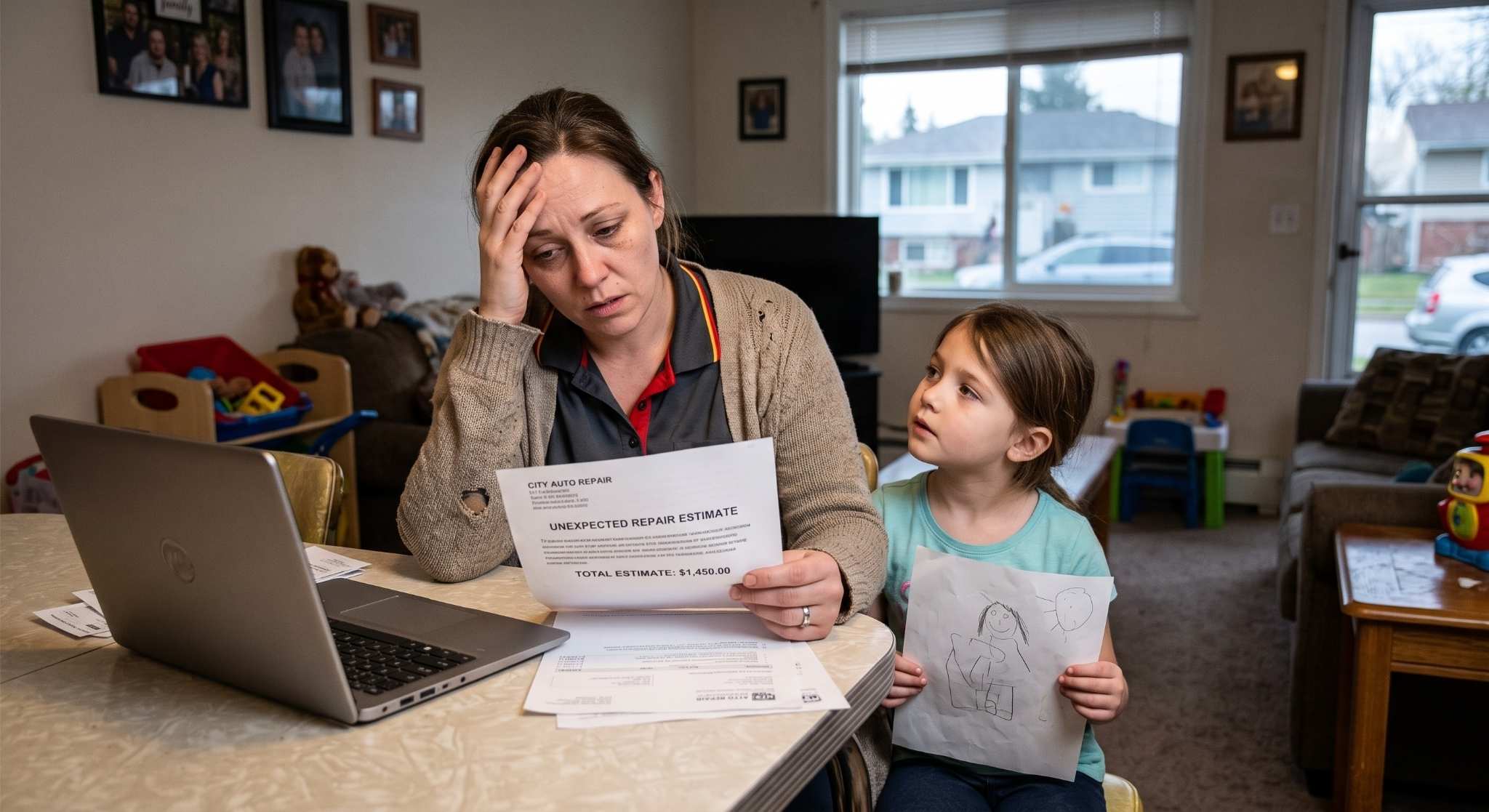
ALICE is hardworking, yet often just one emergency away from financial ruin. These households live paycheck to paycheck, forced to make impossible choices—paying rent or buying groceries, seeking medical care or affording childcare, paying utility bills or putting gas in the car.
Housing vs. Food
Paying the rent on time OR keeping food on the table
Health vs. Family
Seeking doctor visits OR affording reliable childcare.
Utilities vs. Transit
Keeping the lights on OR putting gas in the car to get to work.
What is the ALICE Threshold?
Derived from the Household Survival Budget, this is the average income that a household needs to afford housing, childcare, food, transportation, health care, and a smartphone plan, plus taxes. It is calculated for various household types for every U.S. state and county. In 2024, 47% of Escambia County households and 36% of Santa Rosa County households were below the ALICE Threshold of Financial Survival.
The "ALICE Threshold" includes those who are ALICE and those who fall below the Federal Poverty Level.
47% of Escambia County households
36% of Santa Rosa County households
ALICE Household Survival Budget
The ALICE Household Survival Budget reflects the minimum cost to live and work in the current economy. This budget is the basis for determining whether households are above or below the ALICE Threshold by county.
The struggle for ALICE households is the gap between wages and expenses. In 2024, a family of four in Escambia County needed approximately $88,800 annually just to cover the essentials, while a similar household in Santa Rosa County needed approximately $90,000 — nearly three times the Federal Poverty Level of $31,200. Yet even with both parents working full time in two of the state’s most common jobs — a cook and a teller — this family’s combined income still fell short of the cost of basics by approximately $35,000 to $37,000 per year, depending on county.
.png)
The State of ALICE in Florida
Nearly half of all Florida households struggled to afford basic necessities in 2024, underscoring the growing financial challenges facing working families across the state.
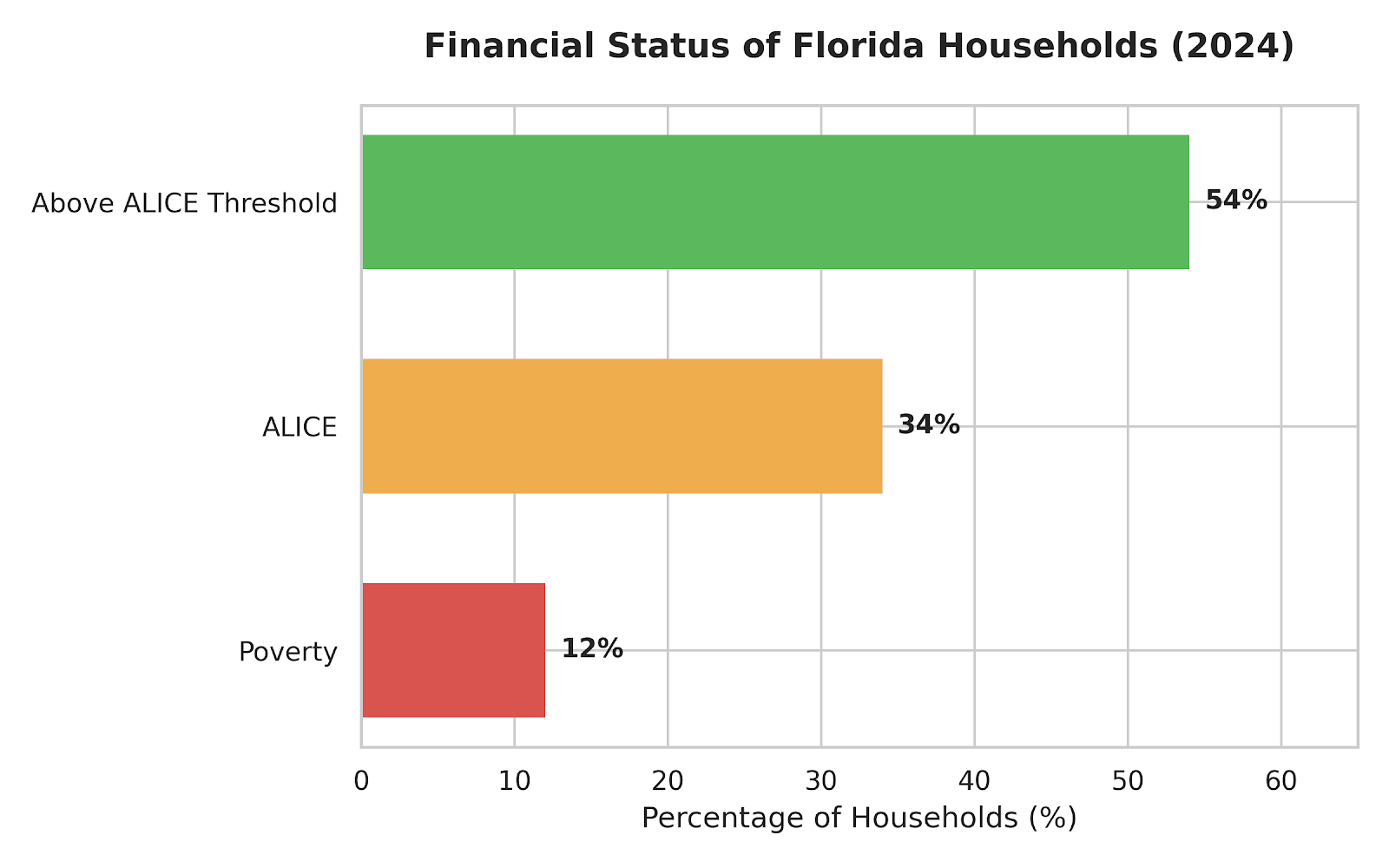
According to the State of ALICE in Florida report, 47% of Florida households lived below the ALICE Threshold—the income needed to afford essential household expenses where they live. This includes 12% of households living in poverty and an additional 34% classified as ALICE. Although ALICE households earn more than the Federal Poverty Level, they still cannot consistently afford necessities such as housing, child care, food, transportation, health care, and other everyday expenses.
Of Florida's 9.1 million households, more than 4.2 million experienced financial hardship in 2024. Florida's hardship rate exceeded the national average of 41%, highlighting the increasing gap between wages and the rising cost of living.
The ALICE data provides valuable insight into the financial realities facing many essential workers—including teachers, health care professionals, mechanics, retail employees, and administrative staff—who help keep our communities running but often struggle to make ends meet. Understanding these challenges helps communities, businesses, nonprofits, and policymakers develop strategies that improve financial stability and expand opportunities for working families throughout Florida.
ALICE Info Sessions 2026
United Way of West Florida (UWWF) will host virtual informational sessions that provide an overview of ALICE households and their impact across Escambia and Santa Rosa counties.
In this one-hour session, you will learn:
- The history of ALICE
- ALICE in Florida
- ALICE in Escambia and Santa Rosa counties
- How to better serve and advocate for ALICE communities
This session is ideal for the general public interested in understanding and supporting ALICE households.
Remote – last Wednesday of each month now through October:
- Wednesday, July 29, 11:30 am-12:30 pm
- Wednesday, August 26, 11:30 am-12:30 pm
- Wednesday, September 30, 11:30 am-12:30 pm
- Wednesday, October 28, 11:30 am-12:30 pm