
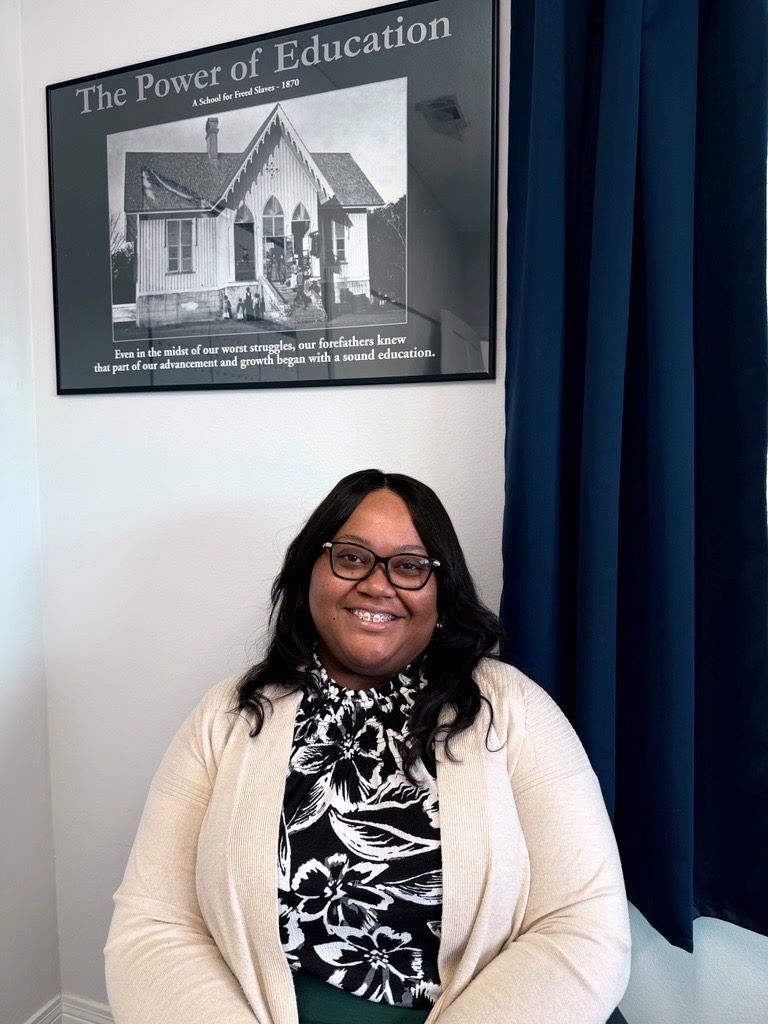
 At United Way of West Florida, meaningful change happens because of dedicated leaders who turn compassion into action. As Vice President of Impact Services, Jessica Johnson plays a vital role in connecting community needs with real solutions—working alongside partners, supporting programs, and helping ensure resources reach the people who need them most. Her leadership helps drive the mission forward every day, strengthening the impact we have across our community. In this spotlight, Jessica shares more about her role, what inspires her, and the difference she hopes to make.
Q: What was the specific moment in your life or career when you realized you wanted to dedicate yourself to community impact?
A: During my first service year as an AmeriCorps VISTA, everything shifted for me. I had originally been on a path toward medical school with the anticipation of becoming a Forensic Pathologist, but that year, I created Pensacola State College’s first food pantry and worked with faculty and staff to introduce a Service Learning curriculum that empowered students to run the pantry long after my term ended. Watching those students, faculty, and staff take such pride in something we built together lit a fire in me. I saw firsthand that real, lasting impact doesn’t come from doing something for a community. It comes from building capacity with the community. That was the moment I knew I wanted to dedicate my career to supporting and building communities beyond what I could do through Forensics. From that first year, I came to understand that meaningful change requires shared ownership, engagement, and belief that everyone has something valuable to contribute.
Q: United Way of West Florida focuses on youth opportunity, health, financial security and community resiliency. Which of these pillars speaks most deeply to your own values, and why?
A: Education speaks most deeply to my values because I believe it’s the pathway to freedom. When individuals have access to learning, opportunities, and supportive environments, they gain choices. Choices create possibilities. I believe in the power of formal education to open doors, but I also believe just as strongly in the informal learning that happens through mentorship, lived experience, and community connection. Both forms of education shape who we become and expand what we believe is possible for our lives.
Q: In your role, we talk a lot about "impact." When you look at a community program, what is the one metric or sign that tells you, "This is actually working"?
A: From my experience, I know a program is working when the numbers and stories align. If we’re seeing measurable improvements (higher retention, greater stability, fewer client duplications, etc.), AND participants tell us they feel more confident and less overwhelmed after using our services, that shows real impact. Data and dignity should always point in the same direction.
Q: With over 40% of our neighbors falling into the ALICE category, how do you see our Impact Services evolving to better support those who are working hard but still struggling to make ends meet?
A: This is a great question!! I see us moving toward a more integrated model of support, where health, education, financial stability, and community resilience aren’t treated as separate issues; they’re interconnected parts of a family’s life. ALICE households don’t experience challenges in silos, so our services shouldn’t operate in silos either. Our evolution will be toward a more holistic, coordinated approach.
Q: Our Community Investment process is powered by volunteers. Can you talk about how important volunteers are to UWWF?
A: I LOVE our volunteers! Volunteers are absolutely essential to UWWF, as the heartbeat for our community investment process. They bring lived experience, professional expertise, and a deep commitment to fairness and transparency. They help ensure that funding decisions reflect the real needs and priorities of our community, not just what we think from the outside. Their time, insight, and passion make our investments stronger, more equitable, and more grounded in the realities of the people we serve.
Q: If you could fast-forward three years, what is one major community "win" you hope we are celebrating together?
A: Three years from now, I hope we’re celebrating a measurable increase in stability for families across our service area and region. I’d love to see fewer people in crisis, more people connected to resources early, and a community where access isn’t determined by zip code. I want us to look back and say that we’ve built systems and support programs that actually work for the people who need them most.
Q: Can you tell me a story of an individual or family you’ve encountered in your career whose life was changed by the kind of services United Way of West Florida provides?
A: As Wellness Case Manager at Pensacola State College, I supported students facing some of the hardest moments of their lives while trying to earn a degree. As the College’s only case manager, I leaned heavily on United Way’s 211 resource and referral service to fill gaps in support beyond what we could offer on campus.
One student in particular stands out because she is truly the definition of resilience. I’ve watched her earn two degrees and a certification, and she is currently working on her Master’s degree at UWF, all while leading a single-parent household. She had grown up with negative banking experiences and relied on payday loans and high-cost check-cashing services because she didn’t trust traditional financial institutions. She was at a turning point, wanting stability, but unsure how to get there.
Through my connection with UWWF’s EscaRosa Financial Stability Coalition, I referred her to a partner at a local credit union who helped her build a healthy financial foundation. Watching her confidence grow as she gained tools, knowledge, and a sense of control reinforced how powerful community partnerships can be. When we connect people to the right resources at the right time, we’re helping them build a stronger future, not just solve momentary crises.
Q: When you aren't busy changing the world, where are we most likely to find you on a Saturday morning in Northwest Florida?
A: If I am not sleeping in, I am usually attending a church small group, having brunch with friends, or paying my “auntie tax” by hanging out with my niece and watching her spend my money LOL.
Q: What is a book, podcast, or quote that has recently changed the way you think about leadership or service?
A: A quote that has carried me throughout my professional and personal life is by the great novelist, Toni Morrison: “If you have some power, then your job is to empower somebody else.” This quote captures the heart of how I view leadership, service, and representation. Any influence or access I have matters only if it helps someone else rise, just as someone else has helped me rise. In my professional and personal life, I believe in shared power, ensuring that those I serve and live with have the tools, voice, and support they need to thrive.