
How Manna Is Tackling Hunger at Its Root in Escambia and Santa Rosa Counties
In Escambia and Santa Rosa counties, hunger doesn’t always look like what people expect.
Sometimes it looks like a full-time job that doesn’t quite cover rent and groceries. Sometimes it looks like a senior choosing between medication and food. Sometimes it looks like a federal employee furloughed during a government shutdown.
And sometimes, it looks like a family walking through the doors of Manna Food Pantries for the first time — unsure, but hopeful.
For decades, Manna has served as a grassroots response to food insecurity in our community. But under the leadership of Executive Director DeDe Flounlacker, the organization has evolved into something more than a food pantry. It is a connector, a data-informed partner, and a frontline responder to changing community needs.
“Hunger is not a root cause,” Flounlacker explains. “People who come here need more than a bag of food.”
That belief shapes everything Manna does.
Dignity by Design
Manna operates by appointment. Clients schedule at least 24 hours in advance and receive a reminder call. When they arrive, a volunteer greeter welcomes them and reviews documentation — photo IDs, Social Security numbers, and birth certificates for children.
The structure isn’t about red tape. It’s about respect and planning.
“Giving a bag of food to someone gives them disposable income,” Flounlacker says. “People make appointments for services. This gives Manna the idea of volume of people for planning.”
Appointments allow the team to anticipate demand, prepare volunteers, and ensure every family receives adequate food. They also create a calmer, more dignified experience for clients.
Each bag distributed meets USDA standards for a healthy diet and represents five days of food for one person. The average value of a single bag is $49.28. For a family of four, that means four bags — five days of food per person — with a total value of $197.12.
“We make sure they have a way to store it and cook it,” Flounlacker says.
Manna never charges for food. Clients may visit up to three times per year, ensuring resources stretch across the community while still providing meaningful support during times of need.
Creating Disposable Income for Working Families
Manna serves low-income households and ALICE families — Asset Limited, Income Constrained, Employed — neighbors who are working but still struggling to keep up with rising costs. When a family receives nearly $200 worth of groceries, that money can go toward rent, utilities, gas, or prescriptions instead.
That shift is powerful.
With funding received through a grant from United Way of West Florida, Manna fed 650 people — and 99% of them reported having more disposable income because of this assistance.
That statistic tells a bigger story than meals alone. For families living paycheck to paycheck, that impact is immediate and tangible.
“United Way of West Florida allows us to do all of this,” Flounlacker says. “United Way of West Florida is making it possible for a child to eat tonight.”
Looking for the Root Cause
But Manna’s mission doesn’t stop at distribution.
“We always ask, ‘What brought you here today?’” Flounlacker says. The question opens the door to deeper understanding. Was it reduced hours? A medical emergency? A car repair? Delayed benefits? Housing instability?
“We look for trends,” she explains. “Ideally, we want to put ourselves out of business. We want to know what brought them here so we can learn the root cause and help prevent them from coming back.”
Manna collaborates with 12 community partners to address underlying issues. If clients need legal services, they can be connected. If other support is required, Manna works alongside trusted organizations to ensure families aren’t navigating challenges alone.This collaborative model strengthens the entire human services network across Escambia and Santa Rosa counties.
Responding When Crisis Hits
In early November 2025, a federal government shutdown tested the resilience of many local families. Through its partnerships, Manna began hearing that furloughed workers connected to Corry Station and Whiting Field were struggling. The organization acted quickly, organizing food distributions at both locations.
“We did this because we heard through our partnerships that there was a need,” Flounlacker says.
The surge was dramatic. Daily visits jumped from 15–60 per day to a 375% increase in appointments during the shutdown.
“Our volunteers and staff and our resilience and flexibility make things happen,” she says. “We only have eight full-time employees. We respond to the needs of our community.”
With a small staff but a committed volunteer base, Manna scaled up operations almost overnight — proof that community-driven organizations can move quickly when people need help most.
Seniors, Stability, and Long-Term Care
In addition to its general food assistance program, Manna operates a monthly senior program. Eligible seniors may visit once per month and receive 10 days of food. For older adults living on fixed incomes, that consistent support provides stability in the face of rising grocery prices and healthcare costs.
Powered by Community
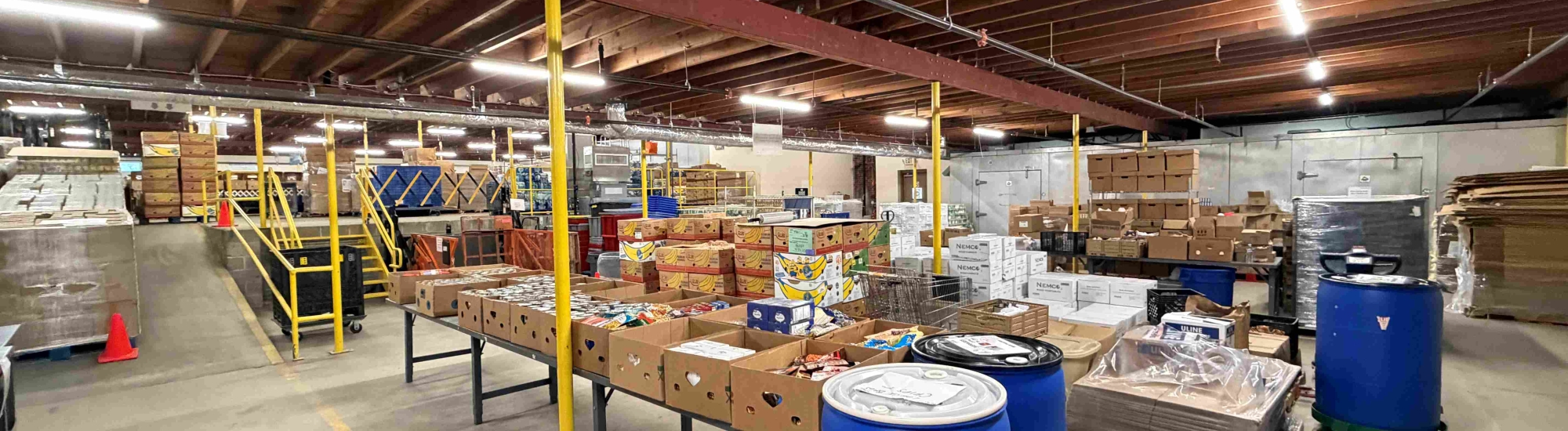
All of Manna’s food is either donated or purchased. Every bag is carefully assembled to meet nutritional standards. The organization does not charge clients or partner agencies for food. Behind the scenes, collaboration drives success.
“We collaborate with other organizations,” Flounlacker says. “Every year we don’t charge our partners either.”
That commitment ensures that food reaches as many neighbors as possible without creating financial barriers for fellow nonprofits. And through the partnership with United Way of West Florida, Manna is able to extend its reach even further — feeding hundreds, increasing disposable income, and providing immediate relief to families across the region.
A Vision Beyond Hunger
There is a quiet boldness in Flounlacker’s statement that Manna hopes to “put ourselves out of business.” It reflects a belief that hunger is solvable — not inevitable. By combining direct food assistance, data-informed planning, collaborative partnerships, and dignity-centered service, Manna is addressing both the symptom and the system.
A bag of food may last five days. But the impact of stability can last much longer.
And thanks to community support — including the investment of United Way of West Florida — families across Escambia and Santa Rosa counties are not facing hunger alone. Because sometimes, the difference between crisis and stability is simply knowing someone is ready to respond.
And tonight, because of that partnership, a child will eat.