
Pensacola, Fla., -- Mar. 27, 2026
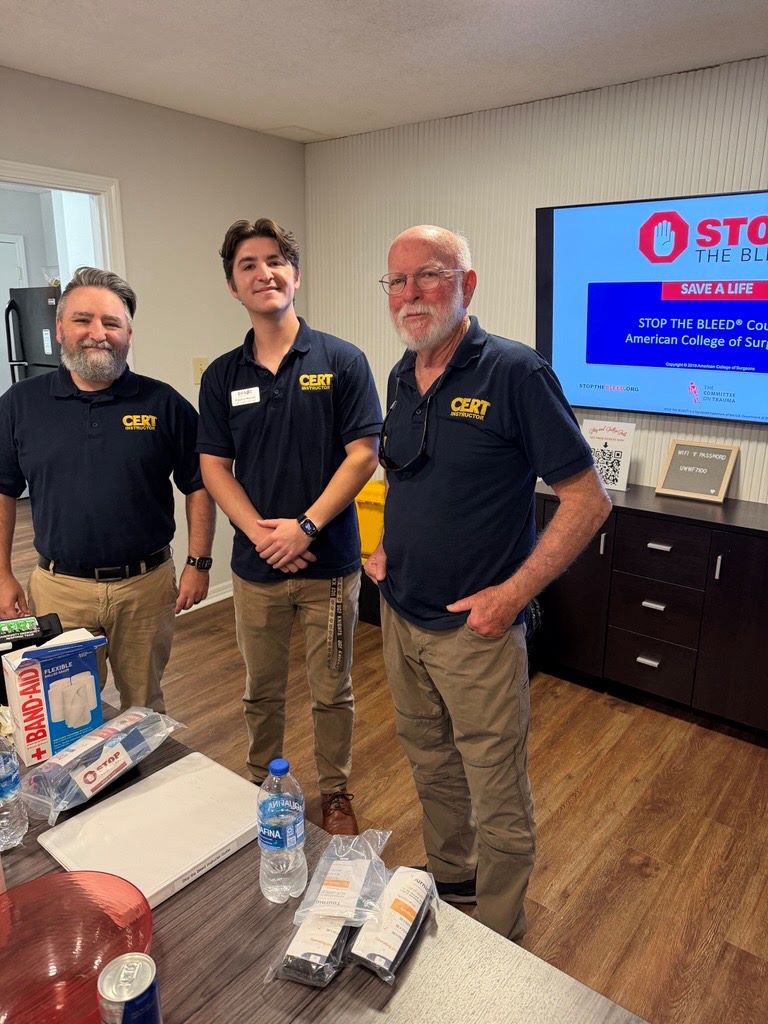 In an emergency, seconds matter. Whether it’s a car accident, a workplace injury, or a large-scale disaster, severe bleeding can quickly become life-threatening. While first responders work as quickly as possible to arrive on scene, the reality is that immediate help often comes from the people who are already there.
That’s why United Way of West Florida recently participated in STOP THE BLEED training with Be Ready Alliance Coordinating for Emergencies (BRACE)—an experience that was not only informative, but empowering.
This wasn’t just another training. It was hands-on, practical, and centered on a simple but critical idea: anyone can save a life.
What is STOP THE BLEED?
STOP THE BLEED is a national awareness campaign and training program designed to teach people how to recognize and respond to life-threatening bleeding. Much like CPR training, it equips everyday individuals with the skills and confidence to take action in those crucial moments before professional help arrives.
The concept is straightforward—severe bleeding can lead to death in as little as five minutes. Knowing how to control bleeding can mean the difference between life and death.
A Hands-On Learning Experience
Our session with BRACE went beyond theory with staff members having the opportunity to learn and practice essential bleeding control techniques in real time.
One of the most impactful parts of the training was working with real tourniquets and learning how to pack puncture wounds—skills that many had never practiced before. There’s a big difference between hearing about life-saving tools and using them yourself. Practicing how to properly apply a tourniquet or pack a wound helped remove the intimidation factor and replaced it with confidence.
“My husband always keeps a kit like this in his car—with a tourniquet, gauze, and other essentials. It’s not something you think about every day but having it with you could truly mean the difference between life and death,” said Sara Cady, Achieve Escambia manager at UWWF.
For many, the training also sparked important personal reflections about preparedness beyond the workplace.
“This training made me realize that it might be a good idea to carry some of these supplies with me,” said Donna Bliss, Community Impact Coordinator at UWWF. “Packing a puncture wound isn’t something you think about every day, but it could save someone’s life. It isn’t hard to do but practicing it in a training environment helps all of us be better prepared to step in and act in the event of an accident or disaster.”
In addition to tourniquet use and wound packing, staff also learned how to identify life-threatening bleeding, apply direct pressure effectively, and stay calm and focused in high-stress situations. The interactive nature of the training made all the difference. By physically practicing these techniques, participants were able to start to build muscle memory which becomes incredibly important in an emergency when adrenaline is high and time is limited.
The Power of Partnership
This training also highlights the importance of strong community partnerships. BRACE is one of UWWF’s funded partners, and opportunities like this are a direct reflection of what those investments make possible.
“We’re incredibly grateful for the support from United Way of West Florida. Partnerships like this allow us to provide hands-on, life-saving training to organizations and individuals across our community. Together, we’re helping ensure more people are prepared to act when it matters most,” said Preston Marvel, BRACE Community Emergency Response Team Program Manager.
By supporting organizations like BRACE, UWWF is helping equip our community with critical, life-saving skills.
Real Life Application
"Emergencies don’t wait for the “right” person to show up. They happen unexpectedly, often in everyday places like offices, schools, roads, and public places,” Marvel said.
In those first few minutes after a traumatic injury, bystanders are the true first responders.
“STOP THE BLEED training recognizes this reality and empowers individuals to step into that role. It shifts the mindset from “wait for help” to “be the help,” he said.
For organizations like UWWF, this kind of training is especially valuable. As a team that works closely with the community, UWWF understands that preparedness is part of our responsibility. Whether we’re in the office, attending events, or out in the community, having staff who are trained and ready to respond adds an extra layer of safety not just for ourselves, but for those around us.
Real-World Impact
The skills learned during this training are directly applicable to real-world emergencies. In a crisis situation such as a car accident, workplace injury, natural disaster or mass casualty, uncontrolled bleeding is often one of the leading causes of preventable death.
Having the ability to quickly apply pressure, use a tourniquet, or pack a wound can stabilize an injured person long enough for emergency medical services to arrive. In many cases, that immediate action is what saves a life.
In disaster scenarios, these skills become even more critical. Emergency responders may be delayed due to damaged infrastructure, high call volumes, or unsafe conditions. In those moments, community members must rely on each other.
Training like STOP THE BLEED helps bridge that gap.
“It’s easy to feel helpless in the face of a medical emergency, especially one involving significant trauma,” Marvel said. “Sometimes people worry about doing something wrong or making the situation worse. As a result, they may hesitate or not act at all.”
This training directly addresses those fears by providing clear, simple steps to follow. Instead of panic, there’s a plan. Instead of uncertainty, there’s knowledge. And instead of standing by, there’s the ability to step in and make a difference.
Looking Ahead
“We are grateful to BRACE for providing such a comprehensive and engaging session, and for helping us build skills that we hope we never have to use—but are ready to use if needed,” Bliss said. “Emergencies are unpredictable. But our response doesn’t have to be.”